Pioneering Discovery in Extreme Marine Environments.

Unlocking novel enzymes from the ocean’s most extreme ecosystems to drive sustainable bioeconomy solutions

NEXTMARINE is a 48-month Horizon Europe project

Exploring physicochemically extreme marine environments – such as hydrothermal vents in the Aegean Sea and anoxic zones in the Baltic Sea—to uncover hidden biodiversity and biotechnological potential.

These ecosystems host microorganisms with unique survival strategies, offering a largely untapped reservoir of novel enzymes with transformative applications in food, pharmaceuticals, biomaterials, and green industrial processes.

clip path group (2)

12

partners

clip path group (3)

9

countries

Why extreme marine environments?

Extreme marine ecosystems remain among the least explored habitats on Earth.

NEXTMARINE investigates how sustainable, low-impact exploration can advance marine biodiversity knowledge while enabling sustainable innovation

2009 04 23 16 01 24 meteor m78 2 308rov (10) 1 (1)
schéma approach 1 (1)

Scientific and technological Approach

NEXTMARINE partners develop approaches that minimize environmental impact while maximizing scientific and industrial value

Approach 1: Novel imaging and seabed mapping

Novel underwater hyperspectral imaging on ROVs for precise seabed mapping

Approach 2: Ai and machine-learning for less invasive sampling

AI and machine-learning-based analysis to guide targeted, less invasive sampling

Approach 3: Innovative DNA amplification

Advanced DNA amplification and metagenomic pipelines forr low-biomass samples

Approach 4: New enzymes

Enzyme discovery, engineering and scale-up for real-world applications.

Objectives​

At NEXTMARINE, our work spans a wide spectrum of interconnected fields, reflecting the project’s ambition to push the boundaries of marine science and innovation. From exploring extreme ocean environments to developing cutting‑edge sensing and mapping technologies, and from unlocking novel biotechnological resources to strengthening sustainable industrial applications, our objectives reflect the diverse expertise of the consortium and the complexity of the ecosystems we study. Together, they form a coherent roadmap that drives pioneering research while supporting Europe’s move toward a circular, responsible, and biodiversity‑aware blue economy

frame 7 (1)

Develop sustainable technologies for mapping and sampling extreme marine environments

frame 5 (2)

Explore and characterize two extreme ecosystems in the Aegean and Baltic Seas

frame 6 (1)

Identify and engineer novel enzymes with unique catalytic profiles

frame 10 (3)

Demonstrate applications in food, pharmaceuticals, and biomaterials

frame 8 (1)

Ensure ethical, legal, and open science compliance, including ABS and GDPR

frame 9 (1)

Maximize impact through dissemination, exploitation, and stakeholder engagement to ensure the pick-up of results

Our impact

NEXTMARINE contributes to the green and circular bioeconomy by enabling enzyme-based alternatives to chemical processes, supporting sustainable use of marine genetic resources, strengthening European leadership in marine biotechnology and responsible innovation, and training early-career scientists through interdisciplinary collaboration.

Expeditions

To achieve its scientific goals, NEXTMARINE conducts two complementary expeditions—one in the Aegean and one in the Baltic—because each environment hosts distinct extreme conditions and unique microbial communities, offering different opportunities for discovery and innovation.

expedition 1

Aegean sea

The NEXTMARINE team travels to the hydrothermal vents of the Aegean Sea, one of Europe’s most extreme underwater environments, to carry out early‑stage exploration and sampling. These vents host unique extremophiles with promising biotechnological potential, making them a key site for advancing the project’s scientific goals. Using AI‑driven tools, novel mapping systems, and remotely operated vehicles, partners from across Europe conduct coordinated fieldwork to collect high‑value samples while minimizing environmental impact.

expedition 2

Baltic sea

In the Baltic Sea, NEXTMARINE focuses on anoxic zones andammunition dump sites, areas that provide access to another set of remarkable extremophilic microorganisms. These expeditions combine innovative robotic sensing, hyperspectral imaging, and large‑scale biodiversity assessment, enabling precise sampling in challenging conditions. The goal is to uncover new enzymes and better understand how life persists in low‑oxygen environments—insights essential for scientific discovery and future green industrial applications.

news

Welcome to the NEXTMARINE news page, where we share the latest milestones, field activities, project insights, and developments from across our international consortium. As we explore extreme marine environments in the Aegean and the Baltic and advance cutting‑edge research in biotechnology, ecosystem understanding, and sustainable innovation, this space highlights the stories behind our scientific progress and collaboration. Stay tuned for updates from our partners, expedition reports, technological breakthroughs, and key achievements as the project unfolds.
F93535 300x150 Non classé

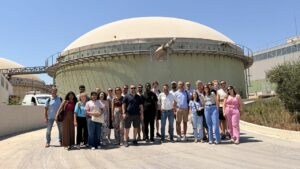
NEXTMARINE: Pioneering Discovery in Extreme Marine Environments November 27th and 28th, 2025University of […]

Join the family

Stay connected to everything happening in the extreme world.
xtream logo original (1)
logo explora (1)
logo nm 2
xtremolife logo

Subscribe To the Newsletter

Follow NEXTMARINE on social media to receive updates on expeditions, results and eventsStay in touch with us to get
latest news and special offers.

Email

The form has been submitted successfully!
There has been some error while submitting the form. Please verify all form fields again.